

Sawing Basics: My First Try
Featured Post #41


Featured Posts are hand-picked to showcase the excellent work our community members are doing. In keeping with SmallStack’s mission to lift up small publications, all Featured Post authors have fewer than 500 subscribers. Think of it like staff picks at your favorite indie bookstore.
Today’s Featured Post is by Daniel Limb, author of The Woodworking Shed , and was selected by Team member Robin Taylor (he/him). Robin writes:
As a hobby carpenter, I really enjoyed how careful and thorough Daniel’s exploration of cutting and listening to his tools turned out. Is the fine art of measuring well lost to us? Not if this post is any indication!

A SmallStack Featured Post
Sawing Basics: My First Try
In this exciting step-by-step episode from The Woodworking Shed, I'm putting theory to the test and finally breaking out the Ryoba for my first-ever saw cuts!
By Daniel Limb
Making the Cut
Welcome back to The Woodworking Shed!
This week I’m putting reading into practice! I’m sawing wood.
This is the first true step on my hand tool woodworking journey - So let's hope I don't embarrass myself too much!
I'm going to step through the process from a beginner’s perspective using what I have learned so if you’re a newbie too it can be used as a guide.
Let's go for it!
Join the Woodworking Shed community! Subscribe for free to get the latest projects, tips, and tales from my shed. Let's build something together! 🪚🤝
Subscribe
Got Wood..!?
…Sorry, couldn’t resist!
Not much of a sawing guide with nothing to cut…
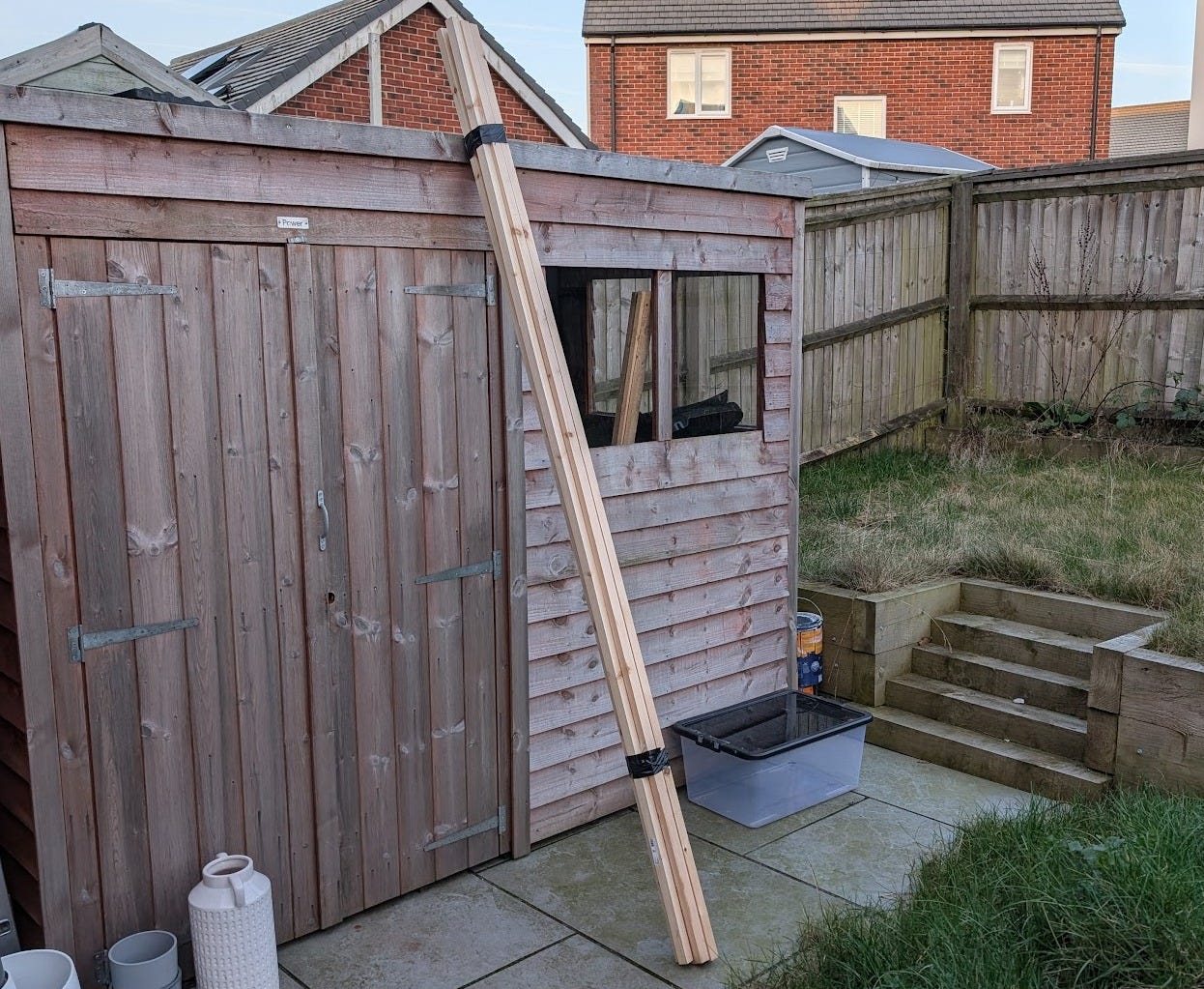
I've been working on my shed-to-workshop conversion and recently hit a snag… So I’m sawing with a purpose!
Want to know more about the snag? Check out this post!

Knowing where to cut…
Let’s talk about cutting lists…
If you’re planning a woodworking project, you should always create one. It helps you plan how much material you need to buy and avoids paying for delivery twice when you've guessed wrong! (That didn’t happen… I promise!)
So what is a cutting list?
It’s exactly what it says on the tin. It’s a list of the cuts that you need to make to prepare the material for the project.
To make one you just need to measure all of the areas you need the material. Better yet if you have a drawing, work it out from there!
Make sure to add a little bit to each measurement to give yourself some leeway - Especially if you plan to plane it down later.
You can see my cutting list for the shed framework pictured (No comments on my handwriting!).
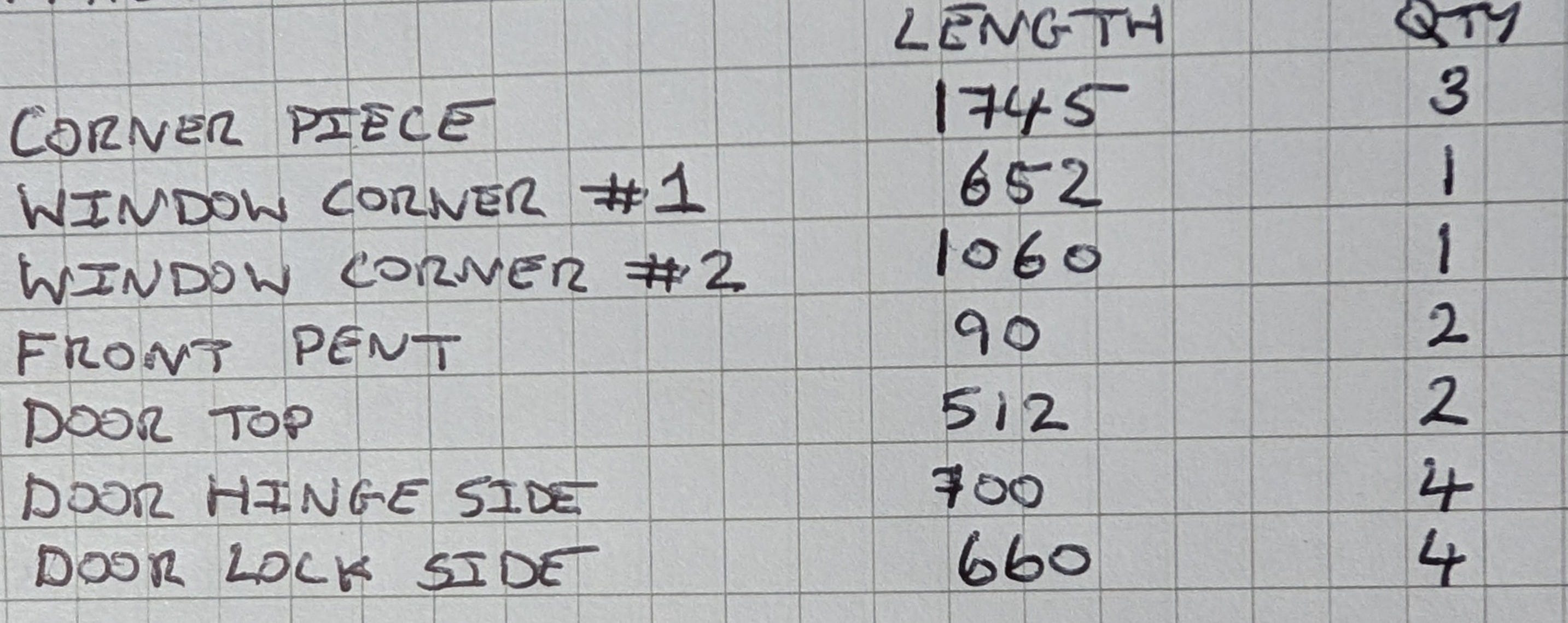
It was quick and easy to do, though I’m not sure how accurate the measurements are - It WAS pretty dark in the shed…
That’s my excuse and I’m sticking to it!
Once you have a cutting list you can easily calculate how much material you need by looking at the lengths of wood available to buy and mapping out how to make the most of that material.
Efficiency saves you money here.
Got any tips for an effective cutting list? I want to hear them!
Tools used
Right, tools… 1. Hacksaw, 2. String… hang on… We do things properly around here!
Here's a list of tools used in this episode:
Ryoba Saw
Combination Square
Tape Measure
Knife
Pencil
So now we know what to cut, where to cut, and what we need to cut with, the boring stuff is complete…
Let’s get chopping!
Measure Twice… Cut Once…
This is so important - If you measure too short and cut without checking. You either need a seat of the pants redesign or you’ve lost that piece.
Don’t risk it - Measure, then measure again!
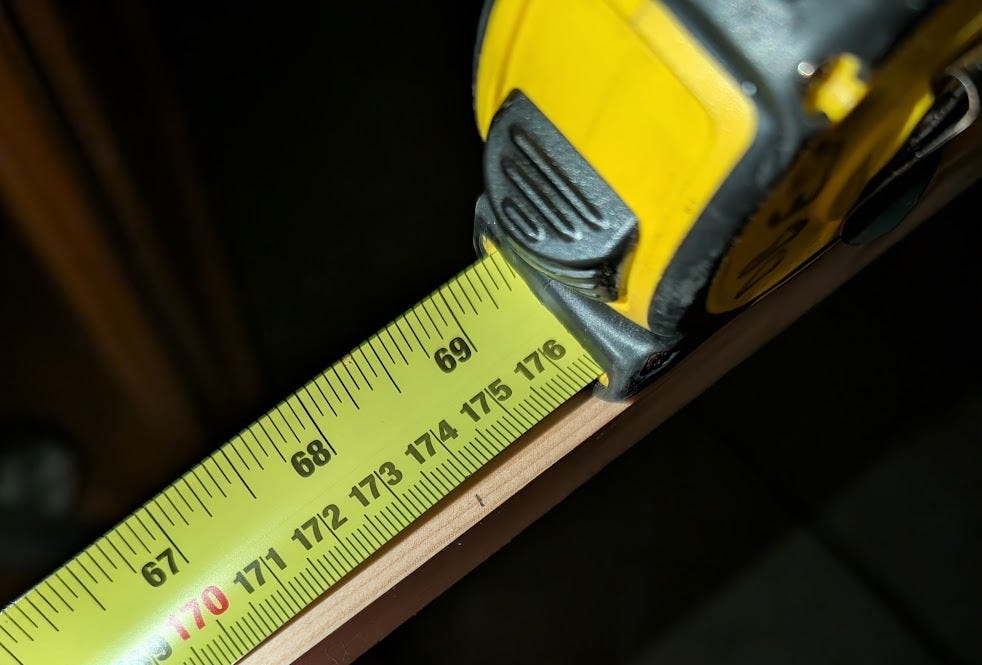
I’m measuring out to cut a piece 174cm long, so I’ve marked it out with my tape measure (And then checked it!).
Next up, I’m marking my cut across the material using my combination square. You can use a set square or anything you know has a perfect 90 degree on it.
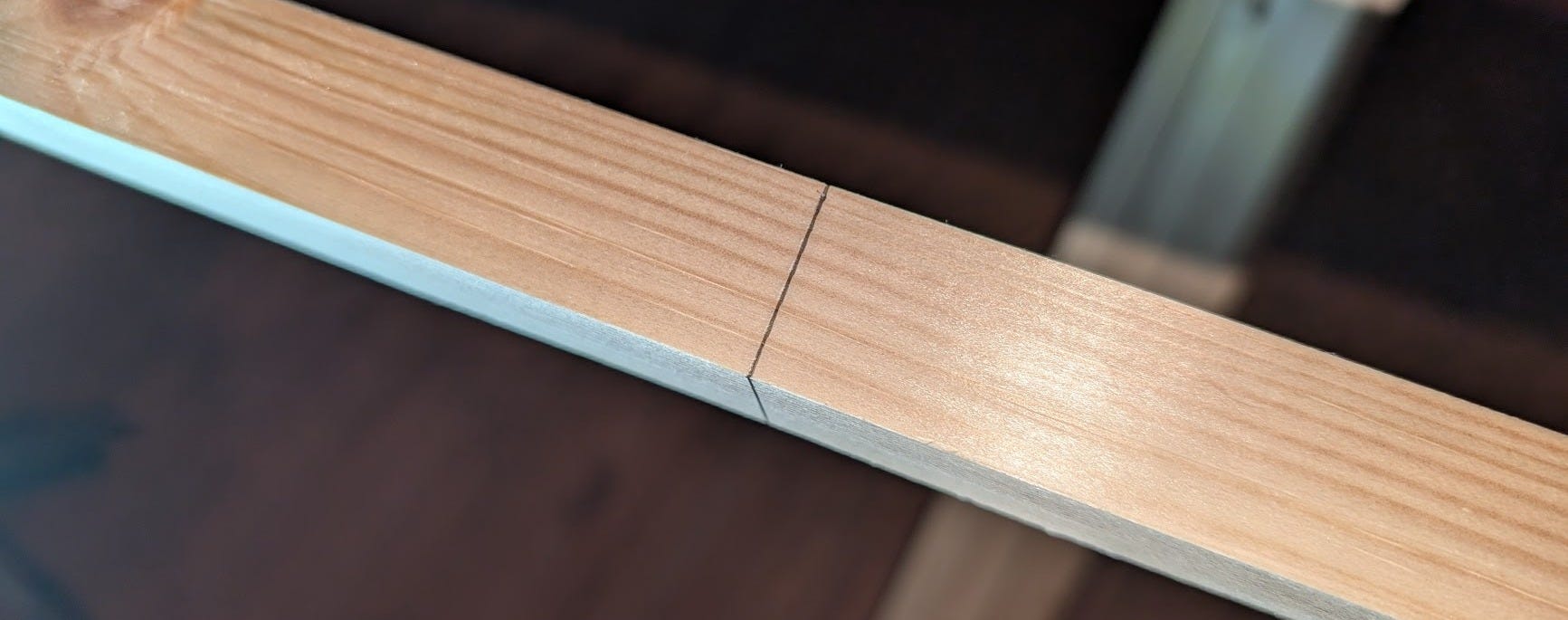
You should transfer this line down the sides of the piece too. Why? Because that’s how you’ll know if your saw cut has gone off track!
Tip: It’s a good idea to mark the wood on the “waste” side ( Something I forgot to do!). So you know which bit of the wood you want to keep! Pretty handy when sawing down the middle.
Marking out the cut on 3 faces is a beginner-friendly way to visualise the cut you need to make. However, it is optional and can be skipped when you are comfortable with the next step…
What’s your biggest measurement fail? I know you have one… Let’s laugh about it in the comments!
The Knife Wall Technique
Not a wall you want to climb.
The knife wall technique is supposed to help prevent tear-out by scoring the wood fibres ahead of the cut. Essentially, it creates a clean edge by cutting the fibres before they have a chance to tear.
Tear out is where the wood fibres get ripped out rather than cut. It’s what causes those ugly splintery edges and chipped ends… There’s a picture later.
I say that it’s supposed to do that because I’ve never tried it… Until now! The following images are from my first-ever knife wall - You’ll have to wait till later to know if it worked or not!
Let’s give it a try…
Using a knife against my combination square I’m scoring firmly over my pencil line.
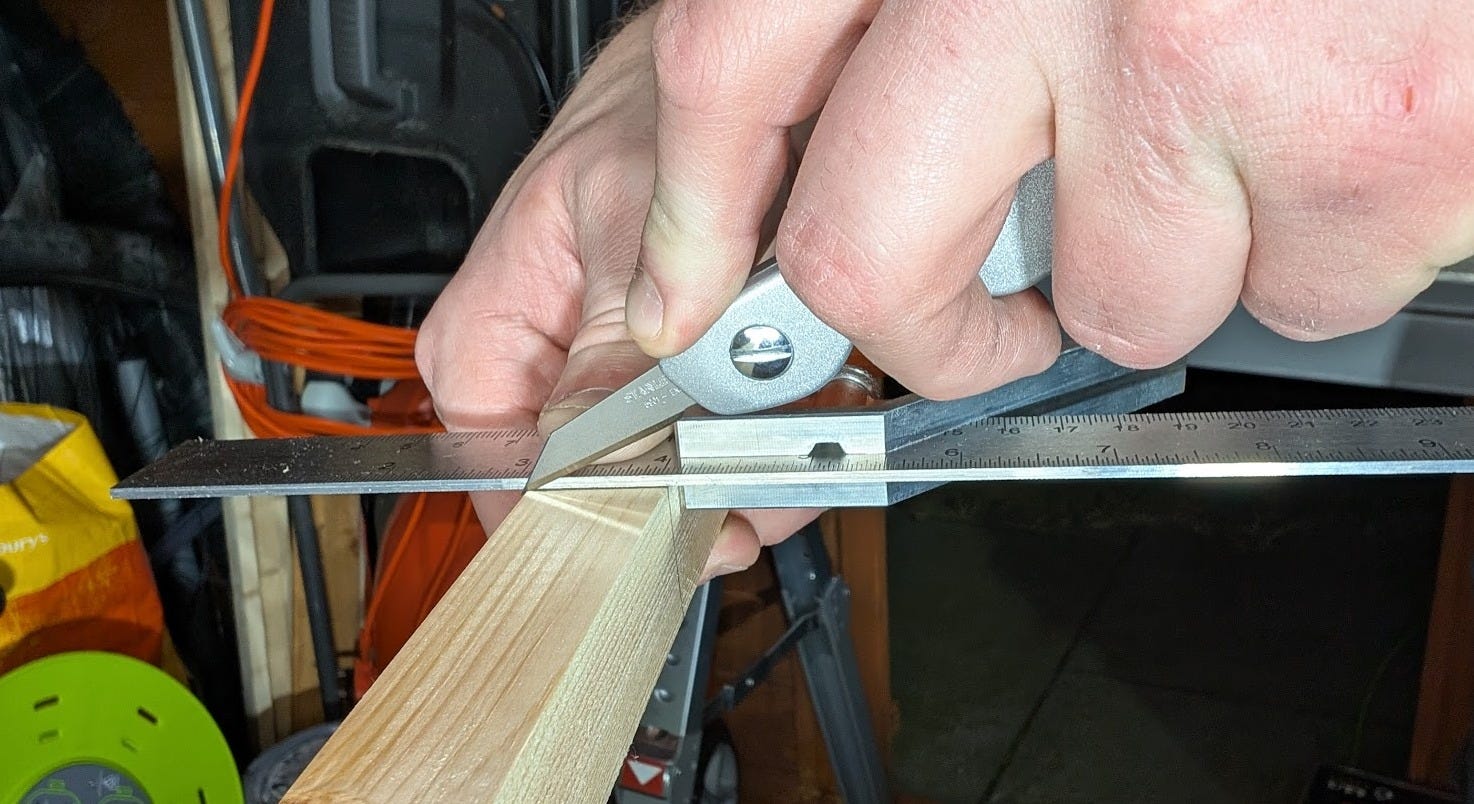
Tip: Roll the knife over the edge of the material to transfer the line onto the next face.
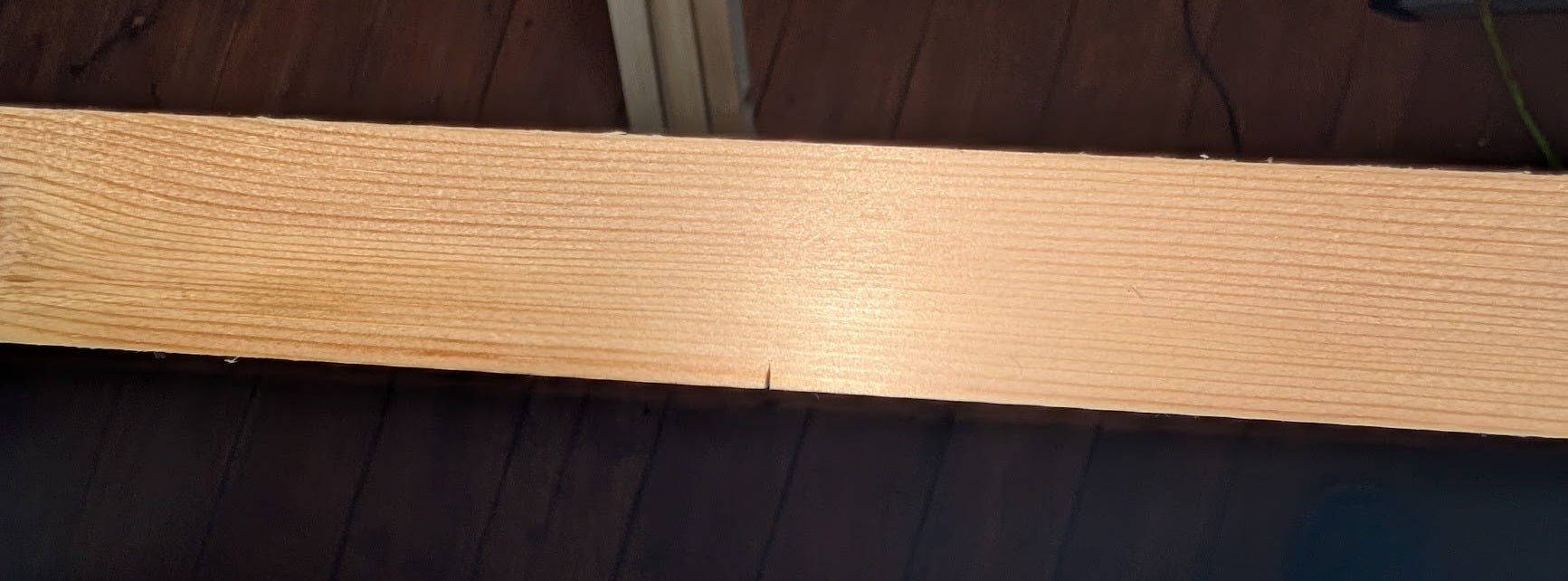
This technique needs to be done around all four faces of the material to work properly!
Once that’s done it’s time to make the cut…
Breaking Out The Ryoba
This is exciting… The first outing of my new saw. The Ryoba! The perfect opportunity to make a fool of myself!
I need to make sure I’m using the right side of this double-sided sawing machine. I’m not too sure what will happen if I get it wrong but I’m not willing to find out today!
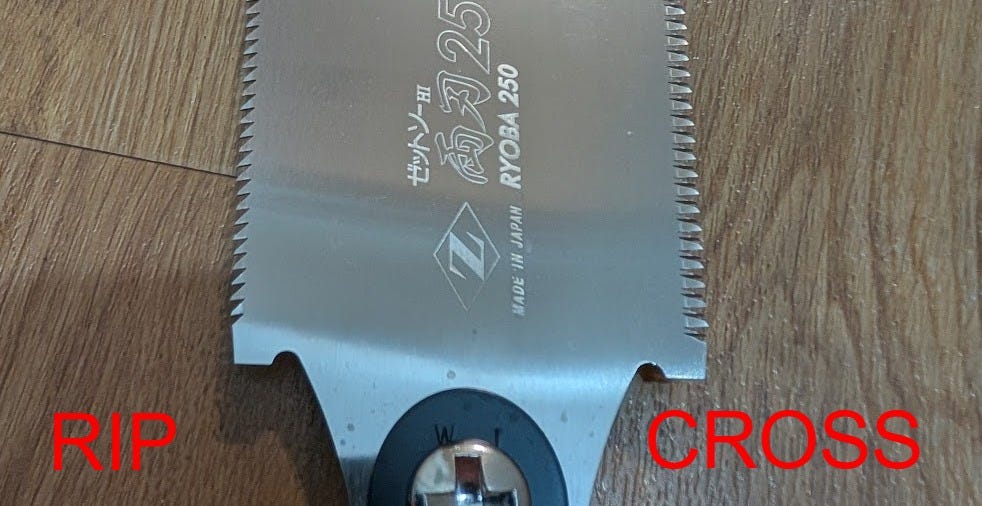
I’m cutting across the grain here so I need the crosscut teeth. You can see the difference in the picture above. I may have to mark the saw with a Sharpie for quick reference!
Here we go… sawing time…
First, I line up the saw with my knife wall - Hold my breath - And start my cut.
I started out by making a full stroke of the saw keeping the teeth flat across the whole width of the material. I used the tips of my fingers as a saw guide too.
Tip: Saw with your elbow. Lock your wrist. The saw is an extension of your arm not your hand.
After this, I started to angle down. I kept going like this until I’d finished the cut.
Tip: Listen to the saw, the cutting sound changes massively when you’re almost through. This is your cue to slow down and support the material to ensure a clean cut!
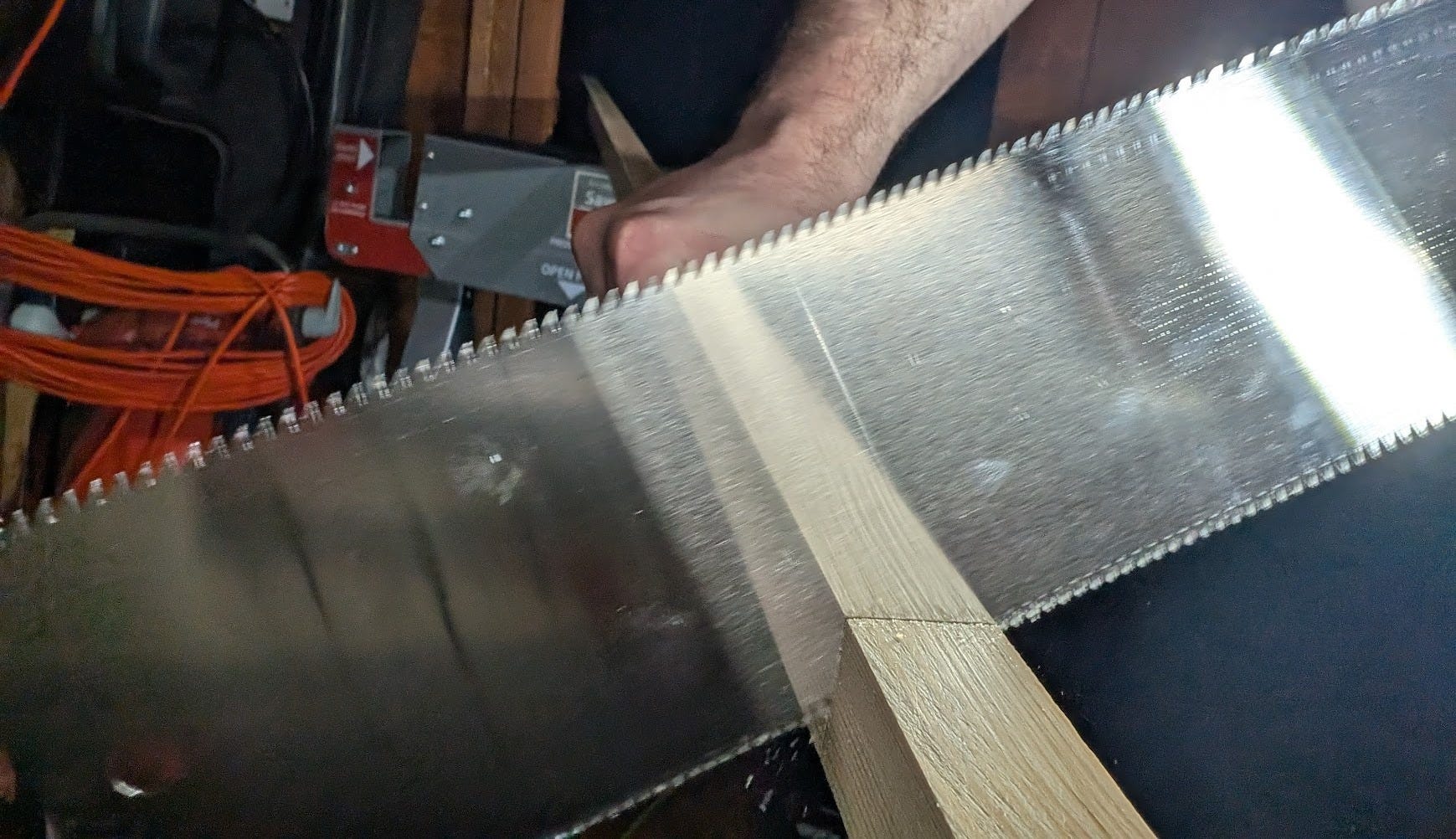
I was a little nervous because I had always planned, for better or worse, to make this post using photos from my actual first attempt. This is real.
Regardless, I went straight to the combination square to see how I did. Much to my surprise - It’s SQUARE! At least close enough to be proud of it!
Look at that!
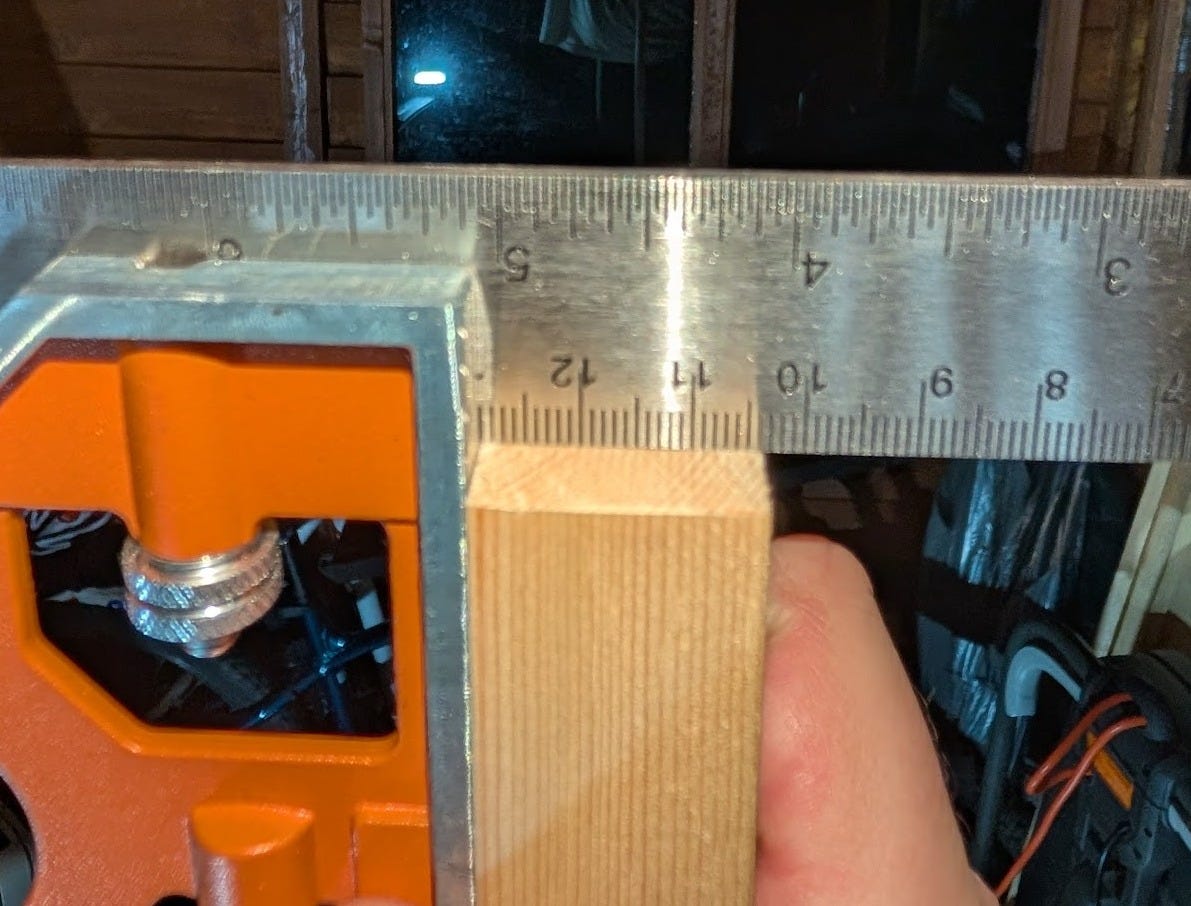
Talk about beginner’s luck…
Join the Woodworking Shed community! Subscribe for free to get the latest projects, tips, and tales from my shed. Let's build something together! 🪚🤝
Cutting Square: Reflections
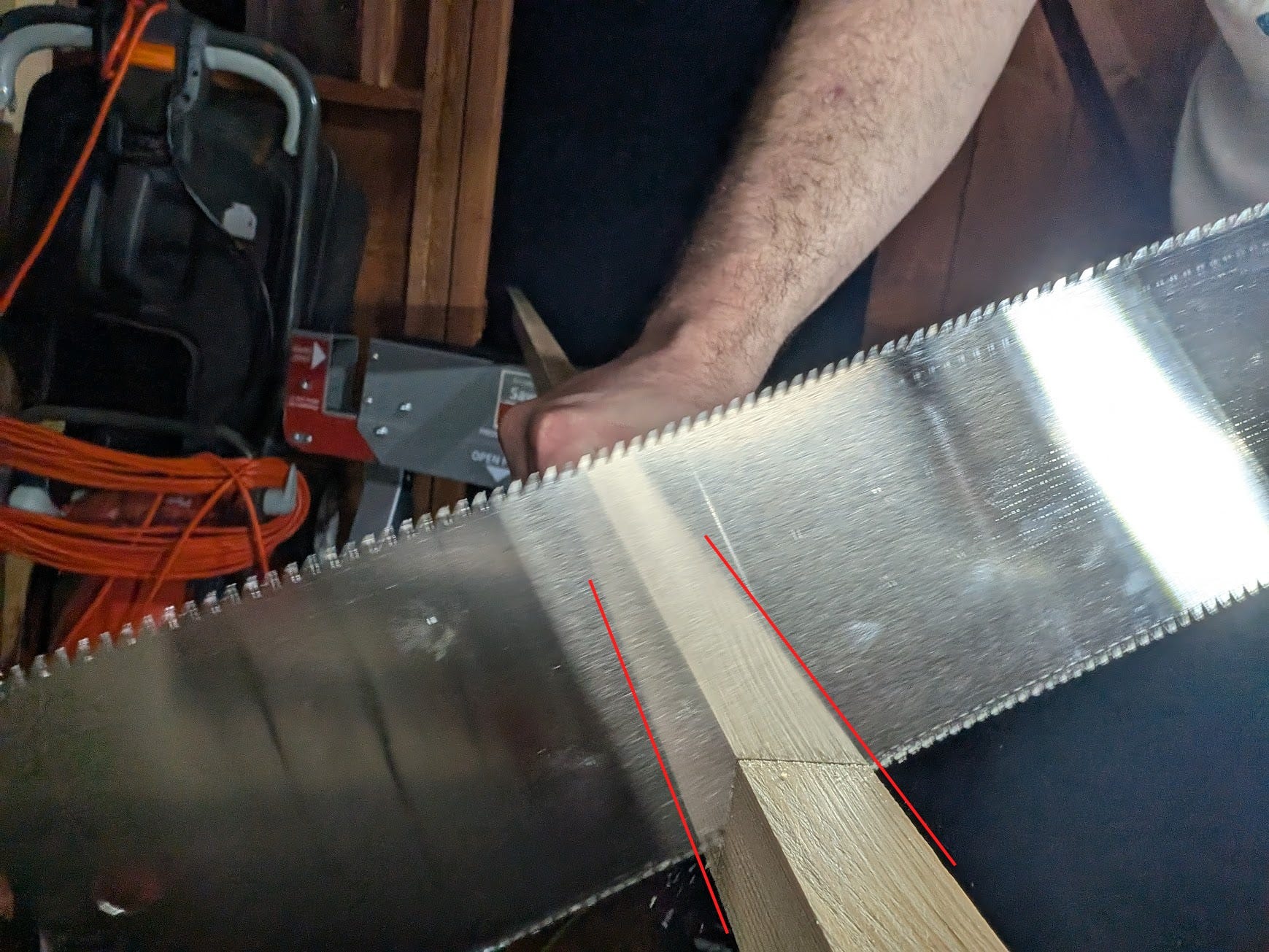
Let's talk more about cutting things square. See that lovely mirror finish on the saw? It’s your biggest ally.
When you place your saw on the material ready to cut. Just check that reflection. If the mirror effect looks like the wood goes off into infinity in a STRAIGHT line. You’re square.
I’ve added some lines to the action shot below to try and demonstrate this. The reflection looks like a continuation of the wood. and even lines up with the other side past my hand.
This simple trick will really boost your sawing skills. Try it!
Proving The Knife Wall
Right… Knife walls… Do they work?
On my second cut, I skipped it. I went straight from measuring to cutting and here is the result:
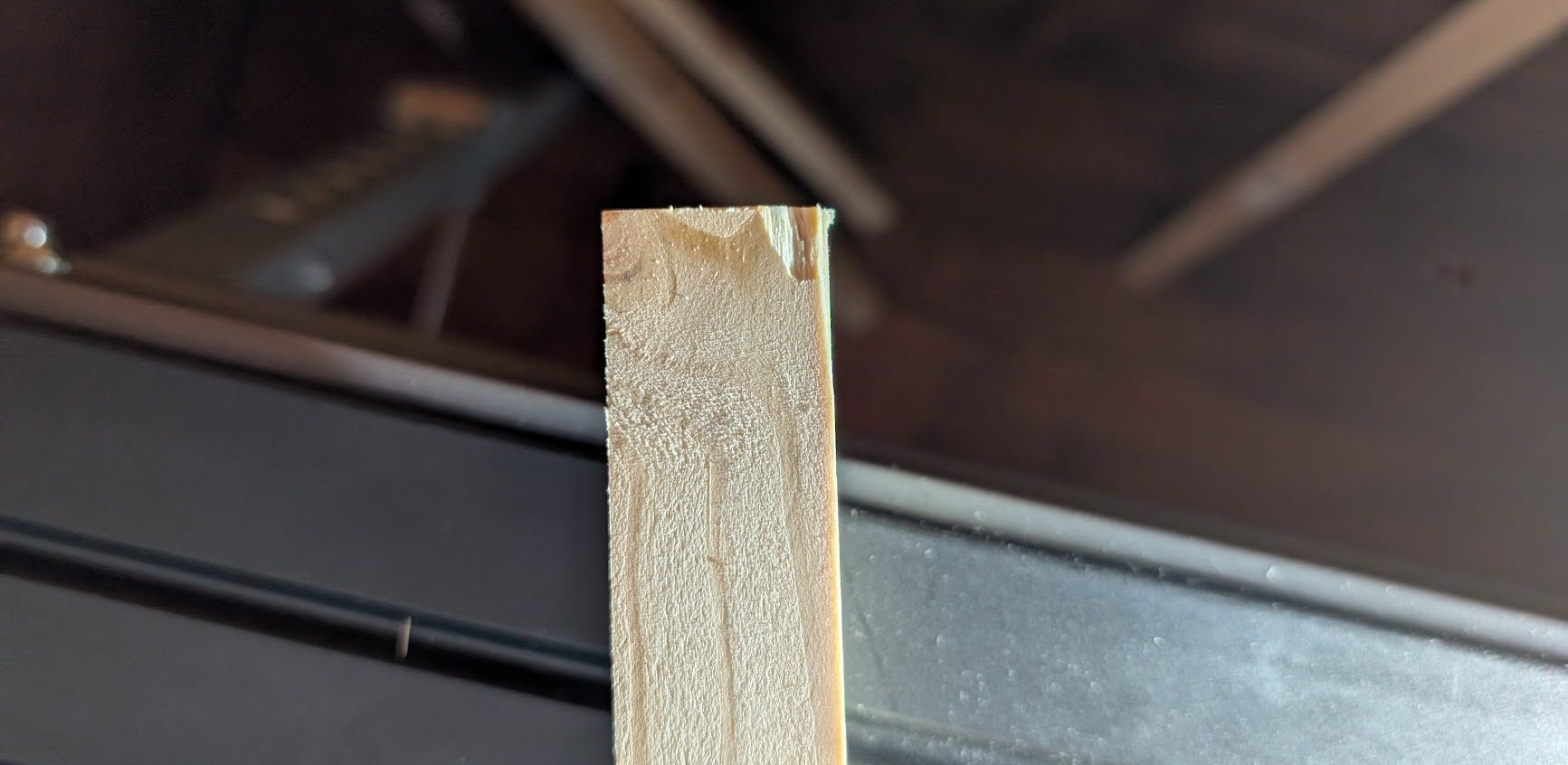
A huge chip tore off the end.
I used the exact same cutting technique the only difference was that I didn’t use a knife wall.
I had to try it - Put the technique to the test. I wanted to see if I was wasting my time. And now I know.
Use a knife wall - It works!
Transferring Those Lines
Here’s another great tip I’ve been using…
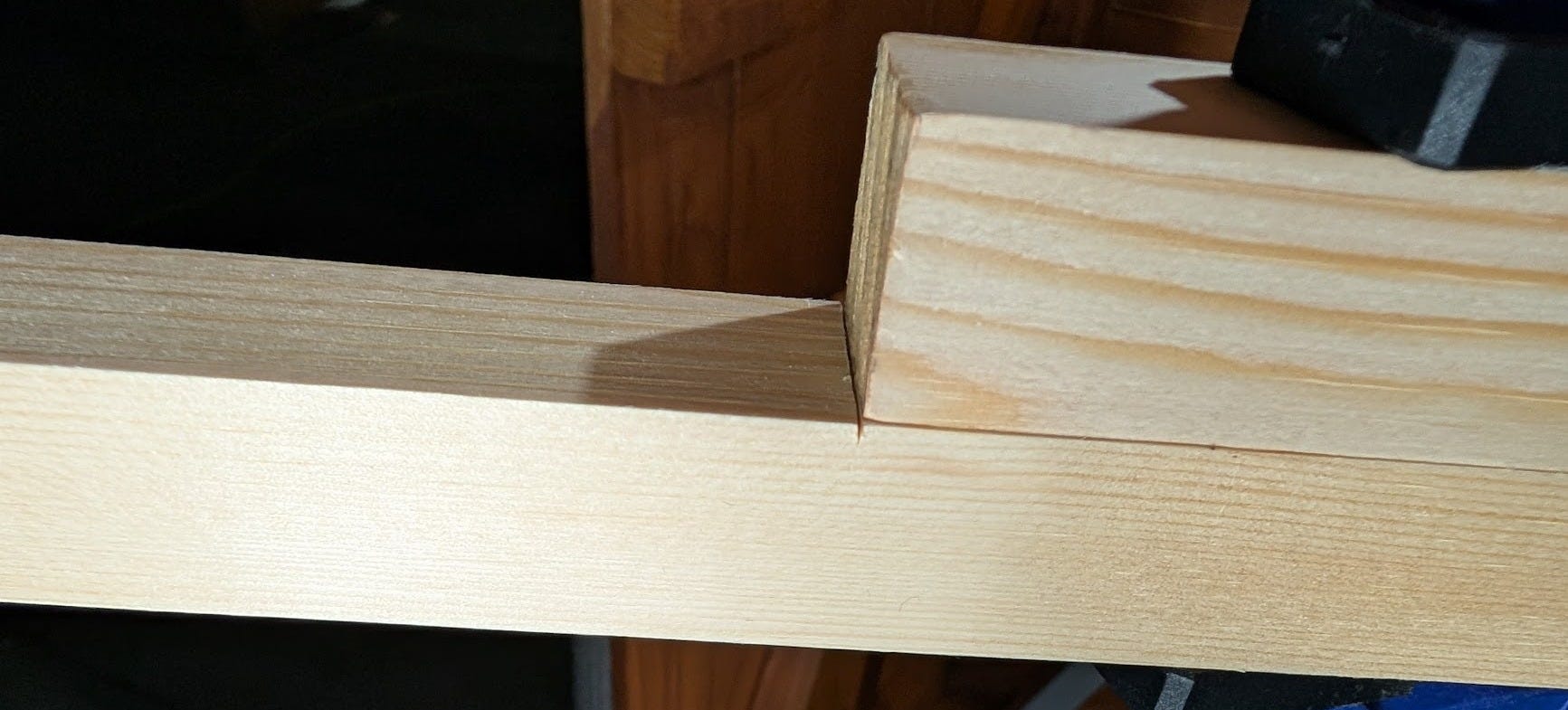
If you need multiple pieces of the same length, you don’t have to measure all of them. The cut length can simply be transferred onto the next piece and so on.
Here’s how I did it:
I made sure that both pieces were aligned squarely at the end and clamped them together.
Next, I used my knife to transfer the length of the cut piece.
Don’t do this with a pencil! You need to really get into the edge of the material else every transfer will be slightly longer!
Finishing Up
Wow, that was pretty exciting! The first-ever saw cuts from The Woodworking Shed. It was nice to finally pick up some tools and get to work on something woodworking-related.
Now I’m even more excited to start on my workbench! But I need to get the workshop finished first.
It’s a slow road but you know what they say:
Patience is a virtue…
…Good things come to those who wait. Blah blah. Get a move on Daniel.
I need to learn how to cut angles next…
What do you think of my first cuts!? Got any top tips to add? Let me know.
About the author
Daniel Limb, an engineer by day and an aspiring woodworker by night, started The Woodworking Shed as an outlet for his own creative journey. What began as a personal progress record quickly blossomed into a deep passion for making woodworking accessible to everyone. An unknown interest in writing became intertwined with his craft, making him a true literary lumberjack. He's dedicated to doing the research so you don't have to, inspiring readers to confidently pick up their tools and create.
The Woodworking Shed is a beginner-friendly woodworking community with a focus on traditional hand tools. This blog shares my real-time progress, tool discoveries, and mishaps. It's about making woodworking accessible and experiencing the joy of building something awesome, together.
Join the conversation
Did you enjoy this Featured Post as much as we did? Leave a comment and let the author know what you loved most!
 | A guest post by
|
Thanks so much for your positive feedback! I completely agree.
Many companies these days seem to treat apprentices as a cheap labour source rather than as an opportunity to develop the next generation!
People fear someone being better than them. Rather than focusing on their own path. The best leaders surround themselves with people better than they are!
Best tip has to be measure twice, cut once, if only my husband could remember this, along with another tip of measure twice, order once.